
Why Play Matters

Book Open Play
why it matters

At Z. Axl’s Dig Yard, our approach is rooted in a simple developmental truth: young children don’t always have the words for what they feel; they show us instead. Between about 18 months and 7 years old, the prefrontal cortex—the part of the brain responsible for reasoning and verbalizing complex emotions—is still developing. So when a child feels overwhelmed, frustrated, or overstimulated, they often cannot say what’s wrong. Instead, they communicate through behavior.

Play is their primary language.

A meltdown, refusal to share, or even deeply focused digging isn’t random; it’s communication. It’s how children express needs they don’t yet have words for. We believe that every “meltdown” is a missed connection rather than a misbehavior. When we understand this, we move from reacting to behavior to understanding what is underneath it, which is where real emotional support begins.

Z. Axl’s Dig Yard is designed to support caregivers in reading this silent language more clearly, so moments of stress can become moments of connection.

Smiling girl in a striped shirt outdoors
Children playing together
why it matters

Behavior as Communication:

Learning the Silent Language

Children often show what they need before they can explain it. What looks like defiance, withdrawal, or overwhelm is usually a sign that a child is still trying to process what they feel in their body and environment.

These moments are important not because they need to be “fixed,” but because they give us insight into a child’s emotional state. Research in early childhood development shows that how adults respond to these moments of dysregulation can shape long-term emotional health, including a child’s ability to regulate stress and build resilience over time.

Our 5,000-square-foot space is intentionally designed to support both children and caregivers—our “Site Supervisors”—in slowing down and interpreting these signals. Instead of escalating stress, the environment encourages co-regulation: adults and children working together to return to calm. This shifts the focus from controlling behavior to understanding it, and from correction to connection.

why it matters

Play as Practice for Relationships

Z. Axl’s Dig Yard is also a place for intentional, purposeful play. When children gather here, they are doing more than playing side by side; they are learning how to be in relationship with others.

In a calm and structured environment, children naturally begin to collaborate on shared builds, navigate space, take turns, and work through disagreements. These everyday moments are where foundational social skills are developed, including cooperation, empathy, and flexibility.

Play becomes a safe practice ground for real life. It allows children to try out different ways of connecting, learn how to repair small conflicts, and experience what it feels like to be part of a group while staying emotionally regulated. These are the early building blocks of healthy relationships, formed through experience rather than instruction.

Book Open Play

Turn Play into Connection

Visit Z. Axl’s Dig Yard and experience a space designed to support emotional growth, regulation, and meaningful connection. Schedule your visit today!

Follow Us On Our Socials

Z. Axl’s Dig Yard on FacebookZ. Axl’s Dig Yard on Instagram
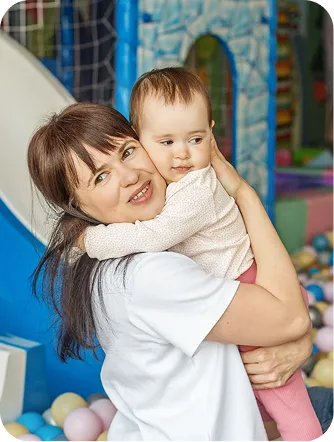
Woman holding a toddler beside an indoor ball pit
3.9k63
Children digging and playing with buckets in a large indoor sandbox
1.9k40
Toddler walking through an indoor play area
4.2k32
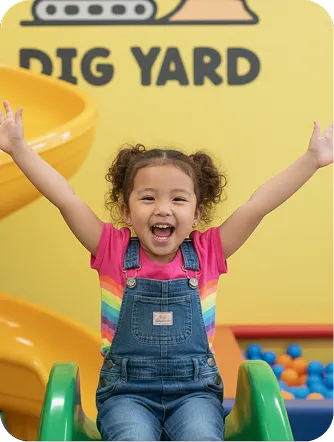
Smiling girl raising her arms on a play structure at Dig Yard
1.2k6
Toddler leaning over the padded edge of a colorful ball pit
1.2k6